
The outstanding credit card base dropped to 77.99 million in August from over 80 million in July, mainly on account of the new norms of the Reserve Bank of India (RBI) that warrant the deactivation of cards that are inactive for a year. While there was a 2.8 per cent decline in net card additions on a month-on-month (MoM) basis in August, a first in many months, credit card spends slipped 3 per cent on a high base. Still, spends topped the Rs 1-trillion mark for the sixth consecutive month.

'The Casa ratio is at 33.4 per cent, which has to keep improving. Right now, there is a bit of liquidity pressure in the market.'

'If the portfolio growth rate is higher, take this loan. If it is lower, liquidate your investments.'

"We will raise Rs 300 crore via bonds of two-, three- and five-year tenures. This will be our maiden bond issuance and is part of our effort to widen funding sources," says Vimal Bhandari, executive vice-chairman and chief executive officer (CEO), Arka Fincap. The firm, a subsidiary of Kirloskar Oil, is only five years old and small (assets of around Rs 5,000 crore with an "AA" rating), but the response to this float will be closely watched: It would be the first by a non-banking finance company (NBFC) after Mint Road upped the risk weights on bank exposures to them by 25 percentage points. The move by the Reserve Bank of India (RBI) has caught NBFCs off guard even though the issue had been flagged by Governor Shaktikanta Das with their corner-room occupants (and that of banks) in July and August 2023 - on consumer credit and the dependency on bank borrowings.

There hasn't been any dramatic moment in the first act (the Budget) but nobody would complain. It's par for the course as long as the figures don't change in the main Budget, which will be presented after general elections.

China's post COVID-19 pandemic economic rebound showed signs of slowdown as the economy grew at 7.9 per cent in the second quarter compared to a record 18.3 per cent in Q1, while the GDP expanded 12.7 per cent year on year in the first half amid the continued global spread of the coronavirus and unbalanced domestic recovery. In the second quarter, the GDP of the second largest economy in the world grew 7.9 per cent year on year, the data released by the National Bureau of Statistics, (NBS) on Thursday showed. On a quarterly basis, the economy expanded 1.3 per cent in Q2.

Chess icon Viswanathan Anand feels the current crop of Indian players, that he has had a role in shaping, has turned out to be "great" in grabbing crucial opportunities.

'A dynamic bond fund acts like a gilt fund in a rate cut scenario and like a conservative short-term bond fund when rates rise.'

MMFs invest in fixed-income instruments maturing in less than one year, minimising interest-rate risk.

Anil Khandelwal, Chairman of Bank of Baroda, expects a 25% credit growth in FY07. He says that BoB did not bid for UWB due to their existing presence in Maharashtra. He adds that the UWB branches will give IDBI good reach and size.
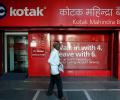
Kotak Mahindra Bank on Saturday reported a 25 per cent growth in its March quarter net profit at Rs 5,302 crore, limited by a drop in the core income due to narrow interest margins. On a standalone basis, the city-headquartered lender's Q4 net profit grew 18 per cent to Rs 4,133 crore. The FY24 consolidated net profit grew 22 per cent to Rs 18,213 crore.

What stood out in his 15-year journey as a member of the political executive at the Centre was his glowing record as India's most successful and effective finance minister. Both as prime minister and finance minister, he understood the importance of gradualism, except when the economy or the polity was in a crisis.
For the last few years, the assumption in much of the economic discourse has been that India is on an assured path of rapid growth.

Moody's Ratings on Tuesday projected general government debt to stabilise above 80 per cent of GDP over the next three years, down from 89.3 per cent in 2020-21. "General government interest payments to fall to around 24 per cent of general government revenue over the next two years from over 28 per cent in fiscal 2020-21, although this remains much higher than the median 8.7 per cent recorded by Baa-rated peers," Moody's Ratings associate managing director Gene Fang said in a post-Budget reaction.
Services and personal loans pulled down the non-food bank credit growth to 19.5 per cent at the end of February 27, 2009 as against 22 per cent a year ago.

SBI Cards & Payment Services reported mixed results for the January-March quarter (Q4) of FY24. While it managed to deliver strong earnings growth, it saw a perceptible decline in net interest margin (NIM) and suffered deteriorating asset quality. Taken together, the market was disappointed with the share dropping 3.5 per cent.

India's financial sector is dominated by large government-owned and private-sector banks.

With the demand for credit expected to shoot up, private banks are bolstering core capital. Seven of them are in the process of raising a cumulative Rs 10,500 crore in equity to fund expansion, which, in some cases like Axis Bank's, includes entry into mutual fund, private equity and wealth management businesses.

A look at six indicators shows all of them have collapsed from positive growth in April to contraction in September.
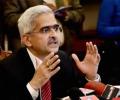
The overarching talking point will be the reluctance on the part of private banks to loosen their purse strings and increase lending substantially, even as the central bank believes there is adequate liquidity within the system.

Personal loans continued to grow at a robust pace and recorded a 13.5 per cent year-on-year rise in March 2021, while industrial loan growth remained negative during all quarters of the last fiscal, the Reserve Bank of India said on Tuesday. As per the Quarterly Basic Statistical Returns (BSR)-1: Outstanding Credit of Scheduled Commercial Banks (SCBs), March 2021' released by the RBI, private sector banks registered a higher loan growth compared to the other bank group.

'India represents one of the top opportunities with robust growth, solid fundamentals, and openness to foreign investment.'

State-owned Indian Renewable Energy Development Agency's (Ireda's) chairman and managing director Pradip Kumar Das has announced that the company has requested the government to allow it to carry out a follow-on public offer (FPO) as it will need further equity infusion to maintain the pace of growth. The FPO would aim to raise between Rs 4,000 crore and Rs 5,000 crore. Ireda, which provides funding assistance and other services to renewable energy and energy efficiency/conservation projects and is 75 per cent owned by the government of India, has requested the Union Finance Ministry to be included under Section 54EC of the Income Tax Act, which will help reduce borrowing costs.

S&P Global Ratings has upgraded its long-term ratings on Tata Motors to speculative grade 'BB' with stable outlook on earnings improvements and potential deleveraging. The ratings agency had earlier placed Tata Motors in 'BB-'. As per S&P ratings, a BB grade is less vulnerable in the near-term but faces major ongoing uncertainties to adverse business, financial and economic conditions.

In the June quarter of FY24, 51 per cent of consumers who took small-ticket personal loans already had more than four credit products at the time of accessing yet another new loan, compared with just 17 per cent in the June quarter of FY20, points out Tamal Bandyopadhyay.

SBI Research has projected the Indian economy to grow at 7.5 per cent in 2022-23, an upward revision of 20 basis points from its earlier estimate. As per official data, the economy grew by 8.7 per cent in FY22, net adding Rs 11.8 lakh crore in the year to Rs 147 lakh crore, the report said, adding this was however only 1.5 per cent higher than the pre-pandemic year of FY20. "Given the high inflation and the subsequent upcoming rate hikes, we believe that real GDP will incrementally increase by Rs 11.1 lakh crore in FY23. "This still translates into a real GDP growth of 7.5 per cent for FY23, up by 20 basis points over our previous forecast," SBI chief economist Soumyakanti Ghosh said in a note on Thursday.

'We are going to need more technical people in government.' 'You can't expect a generalist to understand the complicated world of financial engineering.' 'I regret to say that most of our politicians have no competence to deal with these things. Nor is there a willingness to learn.'
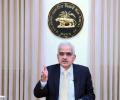
The challenge for the RBI in 2024 is likely to be less about containing elevated inflation and more about curbing excessive financial market exuberance and a 'problem of plenty', notes Sajjid Chinoy, Chief India Economist JP Morgan.

Corporate India's credit quality showed a sharp improvement in the second half of FY22, but high input prices and withdrawal of pandemic-related relief measures can pose pressures in the new year, rating agencies said on Friday. Crisil Ratings, which rates a large number of financial sector entities, reported an improvement in the credit ratio -- the number of upgrades to downgrade -- to 5.04 times in the second half of this financial year, from the 2.96 per cent in the first half of the fiscal. It attributed the improvement to a sustained rebound in demand, which lifted revenues of most sectors to pre-pandemic levels and proactive relief measures by the government that cushioned the pandemic blow.

The Reserve Bank on Thursday tightened norms for consumer credit as it asked banks and NBFCs to assign a higher risk weight for unsecured personal loans, a move aimed at making the lenders more cautious on such advances. The risk weight on unsecured consumer loans has been raised by 25 percentage points. The new regulations, however, will not be applicable on housing loans, education loans, vehicle loans and loans secured by gold and gold jewellery, the Reserve Bank said in a circular.

In August, the Reserve Bank of India Governor Shaktikanta Das held a meeting with chief executive officers/ managing directors (CEOs/ MDs) of large non-banking financial corporations (NBFCs). The discussions included diversifying borrowing sources for NBFCs and housing finance companies (HFCs) to contain increasing reliance on bank borrowing, risks associated with high credit growth in retail segment in unsecured loans, prioritising IT upgrades and cyber-security, improving provisioning, monitoring of stressed exposures and slippages, ensuring robust liquidity and asset-liability management, ensuring transparency in pricing, creating robust grievance redress mechanisms.

Looking under the hood, I see India on the terrible, but commonplace, road to prosperity failure, warns Rathin Roy.

As banks' chase for customers to collect cheap deposits is not fructifying, they are forced to offer inflation-beating real interest rates on fixed deposits now, and state-run banks led by Punjab & Sind Bank tops the chart offering 8-8.50 per cent per annum deposit rate. Banks are forced to offer inflation-beating deposit rates for a tenor ranging from 200 to 800 days as credit growth has been far outpacing deposit mobilization throughout this fiscal, leading to a funding crunch.

'Clearly, the financial system is a drag on the economy and underlines the need for improving banking practice, regulation and oversight.' 'Without that, and an end to the cronyism that caused part of the problem, one can kiss goodbye to 8% growth,' warns T N Ninan.

Had you invested Rs 10,000 each in JSW Steel, Titan Company and Bajaj Finance 20 years ago, when they were just penny stocks (trading below Rs 10), you would have become a millionaire by now.

Ask rediffGURU and PF expert Nitin Narkhede your mutual fund and personal finance-related questions.

'As we enter 2025, it must be acknowledged that there is a convergence of capital, influential people (from business and politics) and technology deciding the destiny of others in the name of pride, patriotism, nationalism, nation building, all of it thinly veiled disguises for personal profit and glory,' asserts Shyam G Menon.

Preparing for the Paris Olympics along with her teammates, Batra said she has learned from her Tokyo Games experience.

You can make all the speeches you want, you cannot argue against 39 straight months of slowing, observes Aakar Patel.

The meeting in New Delhi etc is just the BJP being nice to the man who helped it realise its dream by stabbing Uddhav in the back, notes Saisuresh Sivaswamy.
